Stiffness and restricted movement can make daily activities difficult and frustrating, especially when joints do not move the way they should. Whether the problem is related to injury, surgery, or a chronic condition, joint stiffness can hold you back from living comfortably. Joint mobilization therapy is a hands-on physical therapy technique that improves joint motion, eases pain, and restores normal function. At Atlanta Human Performance Center, we use this method to help patients reclaim flexibility and regain control over their movement.
What Is Joint Mobilization Therapy?
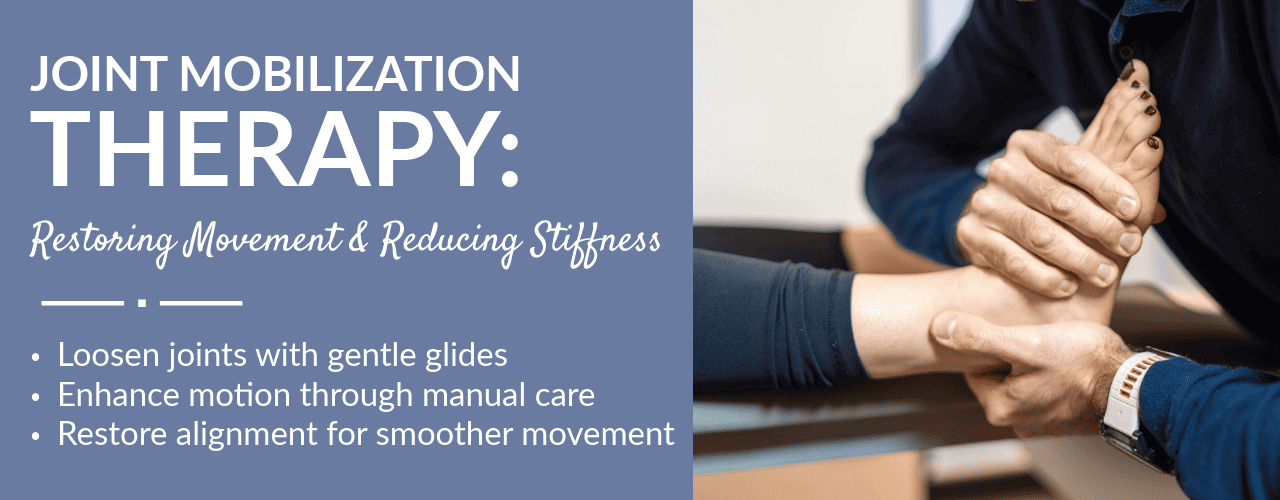
Joint mobilization is a manual technique that targets specific joints to improve motion. A physical therapist applies slow, controlled movements to the joint using their hands. These movements help reduce stiffness, improve alignment, and encourage proper mechanics during movement. Unlike manipulation techniques that involve quick thrusts, joint mobilization is gentle and focuses on small oscillating movements within a safe range.
This technique is especially helpful when muscles surrounding the joint are tight or when the joint capsule itself becomes stiff. It can be used on various joints throughout the body, including the spine, shoulder, knee, ankle, and wrist.
Why Do Joints Become Stiff?
Joint stiffness can result from several causes. After an injury, swelling or scar tissue can limit movement. Prolonged immobility, such as being in a cast or sling, may cause surrounding tissues to tighten. Joint conditions like arthritis can also reduce the space within the joint, causing discomfort and limiting function.
When this occurs, the joint loses its ability to glide or rotate smoothly, leading to compensation and further pain. Joint mobilization helps restore natural movement by gently stretching and realigning the joint surfaces.
How Joint Mobilization Works in Physical Therapy
Physical therapists assess joint movement carefully before beginning any mobilization. They determine which direction the joint is limited in and apply movements that target that restriction. For example, if a shoulder cannot fully rotate outward, the therapist may perform gentle glides to improve that specific motion.
There are different grades of mobilization, each targeting a different goal:
- Grade 1 and 2 are used to reduce pain and relax muscles.
- Grade 3 and 4 aim to increase joint motion by stretching tight structures.
- Mobilizations may be done passively or actively, depending on the patient’s comfort and goals.
These movements also stimulate receptors in the joint that help reduce pain and improve proprioception, which is your sense of where your body is in space.
Common Conditions That Benefit from Joint Mobilization
Joint mobilization therapy can be used for many different musculoskeletal conditions, including:
- Frozen shoulder or adhesive capsulitis
- Post-surgical joint stiffness
- Osteoarthritis
- Spinal joint pain
- Ankle sprains with limited mobility
- Wrist or elbow stiffness following fractures or overuse
For each condition, the goal is the same: improve joint movement, reduce stiffness, and support pain-free function.
Joint Mobilization Is More Than Just Stretching
Although stretching muscles is important, it does not always solve joint restrictions. When the issue lies within the joint capsule or involves the alignment of joint surfaces, stretching alone will not be enough. This is where joint mobilization adds value.
Unlike general stretching, this therapy specifically targets the joint’s structure and mechanics. By restoring the glide and roll that normally occur within a healthy joint, the surrounding muscles and ligaments can work more effectively. Over time, this reduces strain on the area and improves movement patterns.
Supporting Joint Health with Home Care
In addition to in-clinic joint mobilization, physical therapists often recommend supportive strategies you can do at home. These include:
- Gentle range-of-motion exercises
- Heat therapy to warm up tissues
- Strengthening exercises to maintain new movement gains
- Proper posture and body mechanics during activity
- Gradual progression of daily tasks
Staying consistent with home care helps maintain the benefits of therapy and prevents future stiffness from developing.
Discover the Benefits of Joint Mobilization Therapy at Atlanta Human Performance Center
Stiff joints can limit your ability to move freely, exercise comfortably, and complete daily tasks. Joint mobilization therapy offers a safe and effective way to reduce stiffness, restore movement, and support long-term joint health. If you are feeling stuck by restricted motion or joint discomfort, you do not have to push through it on your own.
Contact Atlanta Human Performance Center today to schedule a personalized assessment and learn how our skilled physical therapists can help you move better, feel better, and live with more freedom.
Tags: joint mobilization therapy, manual techniques, movement restoration, stiffness relief